How to Preserve Fuel in Regional NSW
In Regional NSW, fuel is more than a household cost. It helps keep families connected, businesses operating, farms productive, volunteers mobile and community services within reach. In areas where distances are greater and transport options are limited, using fuel wisely is not only sensible — it is part of building stronger, more resilient communities. NSW DPI notes that fuel, particularly diesel, is a major energy input across regional and agricultural activity, and government guidance also highlights practical ways households and transport operators can reduce fuel use. (NSW Department of Primary Industries)
Why it matters to regional communities
Across our District, people often travel significant distances for work, shopping, appointments, farming, school activities and community service. For Lions members, this also includes travel to meetings, projects, welfare visits, fundraising events and district activities. When fuel costs rise or supply becomes uncertain, regional communities feel the impact quickly. Preserving fuel is therefore not about creating alarm. It is about planning ahead, using what we have wisely and helping communities remain connected and supported. Guidance from the Australian Government and NSW agencies consistently points to better trip planning, improved vehicle efficiency and smarter driving habits as practical steps that reduce fuel consumption. (Energy Australia)
Plan trips more carefully
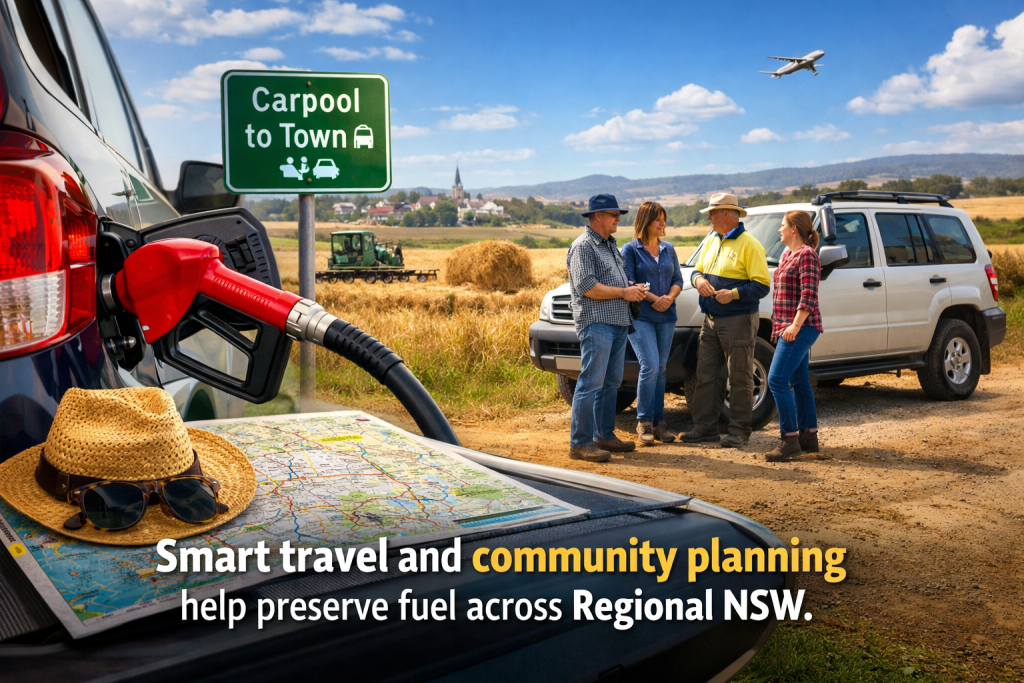
One of the simplest ways to preserve fuel is to make every trip count. Combining errands, reducing unnecessary journeys and organising travel so that several tasks are completed in one outing can lower total kilometres travelled. For community organisations, this can mean coordinating car-pooling to meetings and events, sharing transport to service projects, or using online meetings where appropriate. The Australian Government’s transport guidance specifically recommends route planning and reducing unnecessary trips as ways to cut fuel use and transport costs. (Energy Australia)
Drive more smoothly
How we drive has a real effect on how much fuel we use. Transport for NSW says eco-driving can improve fuel consumption, with average savings of 6 to 22 per cent and up to 30 per cent for some drivers. Smoother acceleration, steadier speeds, anticipating traffic flow and gentler braking all help reduce fuel consumption. These habits also support safer driving and lower wear on vehicles. For regional drivers covering long distances, small changes in driving style can add up to meaningful savings over time. (Transport for NSW)
Keep vehicles in good condition
Vehicle maintenance is another practical way to preserve fuel. Regular servicing, correct tyre pressure, clean filters and attention to engine performance can all support better efficiency. Australian Government advice highlights tyre pressure checks and regular maintenance as part of reducing transport energy costs, while NSW DPI guidance for farm and regional vehicles also links maintenance and equipment efficiency with lower fuel use. Looking after our vehicles helps every litre go further. (Energy Australia)
Reduce unnecessary weight and idling
Fuel is also wasted when vehicles carry unnecessary loads, idle for long periods or create extra drag. Removing gear that is not needed for the trip, avoiding long idling times and keeping vehicles set up efficiently can all help. The Australian Government advises motorists to avoid unnecessary idling and reduce extra weight and drag where possible, as part of lowering fuel consumption. (Energy Australia)
Work together as a community
This is where the Lions spirit matters. Preserving fuel is not only an individual habit — it is something communities can do together. Sharing lifts, planning events efficiently, supporting local services and helping neighbours reduce unnecessary travel are all practical examples of service in action. In regional areas, resilience often comes from people working together, thinking ahead and responding with common sense. Saving fuel where we can helps protect household budgets, supports local productivity and ensures people can still get where they need to go when it matters most.
A practical form of service
Lions are known for practical service, and this is another example of it. We may not control fuel prices or supply pressures, but we can encourage better habits, smarter planning and stronger local cooperation. Every shared trip, every well-maintained vehicle and every unnecessary journey avoided contributes to a more resilient Regional NSW.
In District 201N1, where communities stretch across coastal, inland and rural areas, preserving fuel is one more way we can support each other. It is practical, responsible and community-minded — and that is very much in the Lions tradition.
Sources
NSW Department of Primary Industries, Energy efficiency and farm vehicles. (NSW Department of Primary Industries)
Transport for NSW, Eco-Driving. (Transport for NSW)
Australian Government, Transport. (Energy Australia)
Australian Government, Road transport. (Energy Australia)
NSW Department of Primary Industries, Adaptive driving – the skill factor in fuel efficiency. (NSW Department of Primary Industries)
NSW DPI factsheets index, including farm vehicle efficiency guidance. (NSW Department of Primary Industries)