Lions Green Canopy — Planting a Greener Future Across District 201N1
A national initiative with local roots — and every tree counts.
Australia is a land defined by its natural environment. From the coastal headlands of the mid-North Coast to the open plains of the New England tablelands, the landscape of District 201N1 is part of who we are. Now, Lions clubs across Australia have the opportunity to give something lasting back to that landscape — one tree at a time.
What is the Lions Green Canopy Project?
The Lions Green Canopy Project is a Category A national initiative with a clear, ambitious vision: to have planted one million new trees across Australia by the end of June 2027. Should the project continue beyond that date, the goal becomes 500,000 new trees planted each year thereafter. lionsclubs
The project was formally approved at the Lions Multiple District 201 Darwin Convention, and officially launched at the Multiple District Convention in Traralgon. It is coordinated by a dedicated national committee, chaired by Tim Moore of Western Australia, with state representatives across every jurisdiction. LionsclubsLionsclubs
Why Does It Matter?
Australia has no shortage of treeless housing estates, and trees continue to be lost across the country. With rising temperatures, the need for shade, shelter, and green corridors has never been greater — and a green environment is recognised as beneficial to mental health as well as biodiversity. Lionsclubs
The environment has been a Global Cause of Lions Clubs International for several years, and the Green Canopy Project is the most tangible, visible expression of that commitment in the Australian context. Every tree planted represents a measurable, lasting legacy — for local communities, for native wildlife, and for future generations.
Who Can Get Involved?
The short answer is: everyone.
Whether a club is in a major city or a small rural community, there are planting opportunities in every council area. Suitable sites extend well beyond council reserves — landholders, retirement villages, developers, and homeowners are increasingly supportive of environmental greening projects. The only limit is imagination. Lionsclubs
For clubs whose members may have physical limitations, the project lends itself perfectly to partnerships — with schools, Scout and Guide groups, Landcare volunteers, local councils, and other community organisations. The labour need not fall entirely on Lions members; the coordination, the planning, and the community connections are where clubs can add the greatest value. Lionsclubs
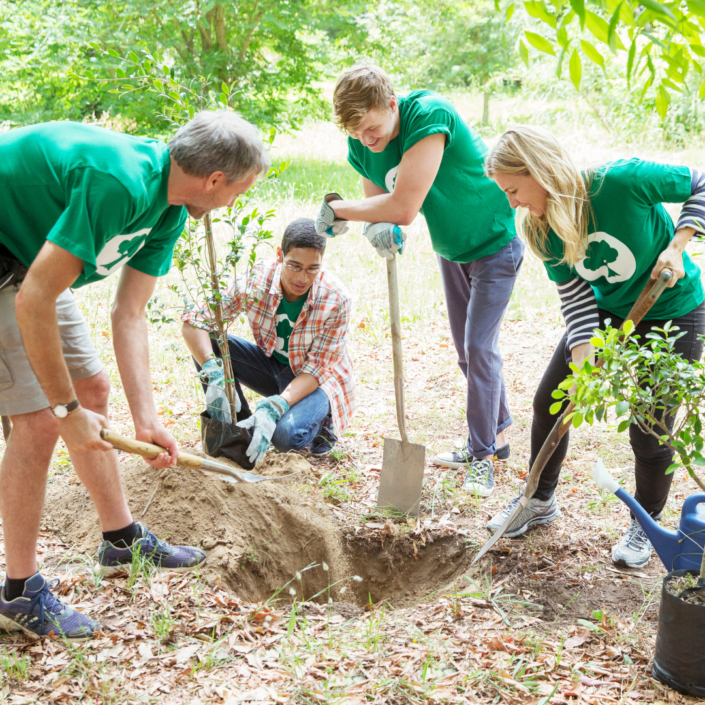
Tree planting is also an outstanding family activity — a great way to spend a day outdoors, and one of the most effective recruitment tools for attracting younger members for whom the environment is a primary concern. Lionsclubs
What Trees Should Be Planted?
The project requires native species, or species otherwise suitable to the specific site. A wet gully in an urban area calls for different varieties than a drought-exposed rural slope with clay soils. The committee’s advice is to consult local nurseries, council horticultural staff, Landcare groups, or botanical garden representatives to identify the right plants for each location. Lionsclubs
What Will It Cost?
Participation may cost a club nothing beyond its time. Corporate sponsors — from small local businesses to large mining companies with environmental obligations — actively look for community tree-planting projects to support. The costs of sourcing trees and preparing ground can often be met entirely through sponsorship, leaving Lions to contribute what they do best: community leadership and organised action. Lionsclubs
How Does This Connect to District 201N1?
District 201N1 stretches across some of the most ecologically diverse terrain in New South Wales — from subtropical coastal systems and riparian corridors to inland woodland and agricultural plains. Our 60 clubs serve communities from Forster and Port Macquarie on the coast through to Tamworth, Armidale, and Narrabri on the inland plains. That geographic breadth translates directly into a wide range of planting environments — each with its own native species profile and community partners ready to engage. lions201n1
The Lions Club of Clarence Environmental, based in our District, has long demonstrated what is possible when Lions clubs commit seriously to environmental service, having championed the protection of threatened Coastal Emus on the Clarence River floodplain. The Green Canopy Project offers every club in the District — not just specialist environmental clubs — a way to contribute meaningfully to the natural world.
Get Your Club Started
Getting involved is straightforward:
- Identify a site — contact your local council, a Landcare group, a school, or a landholder with a suitable area for planting.
- Choose appropriate species — consult a local nursery or horticultural expert for native varieties suited to your site conditions.
- Find a partner — schools, scouts, community groups, and businesses are natural allies for planting days.
- Seek sponsorship — approach local businesses or council for support with tree supply or site preparation.
- Register your trees — report your plantings so they are counted toward the national million-tree goal.
For more information, contact the national committee at greencanopy@lions.org.au or visit the project page at lionsclubs.org.au.
To find your nearest committee representative for NSW, contact Paul McInnes on 0413 758 979.